Water Pressure Regulator FAQs
What is a Pressure Reducing Valve / Regulator (PRV)?
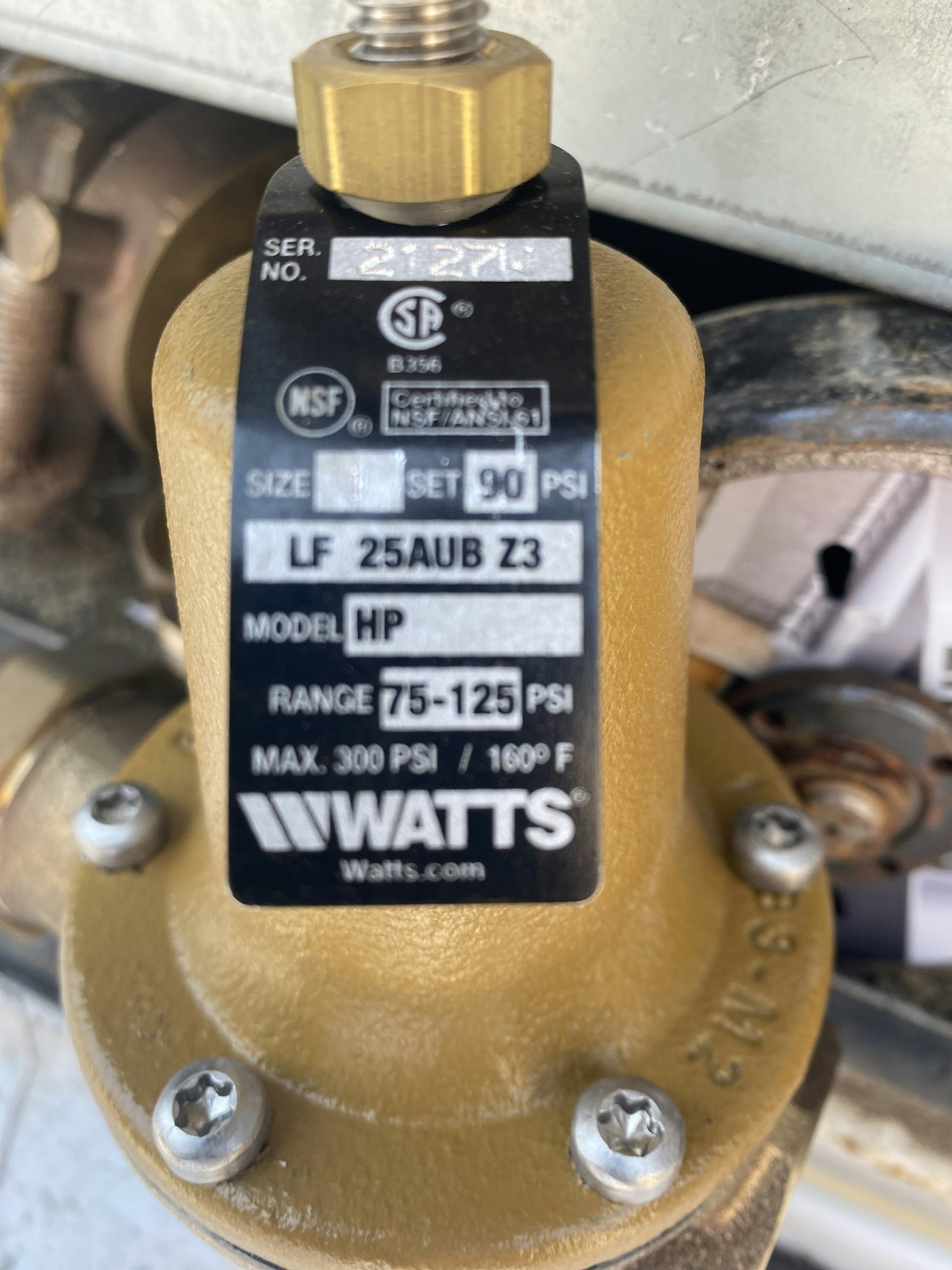
Water pressure regulators, also known as pressure-reducing valves (PRV), are compact valves used to reduce the incoming water pressure from the public water main, providing a lower, more consistent water pressure for distribution to your household plumbing and fixtures. A PRV is essential for protecting your home's plumbing and maintaining consistent water pressure.
Why should I have a PRV?
Rainbow Water’s service area includes significant elevation changes, and water pressure at any given location is largely a function of terrain and elevation. System pressure is influenced by reservoir and tank water levels, flow demands, and 80 pressure-reducing stations installed throughout the District’s system. These pressure-reducing stations are designed to manage pressure throughout the system. The stations help reduce the frequency and severity of leaks in main pipelines, particularly in gravity-driven systems where pressure fluctuations can be significant.
Localized pressure fluctuations can occur at specific properties due to elevation differences and changing system conditions. For this reason, the most effective way for customers to manage water pressure entering their home is through a pressure-reducing valve (PRV) installed on the customer side of the water meter. In many cases, a PRV is located in front of the meter as this is a requirement to protect the District's side of the meter from high water pressure and it is not a substitute for a customer-owned PRV. A customer-owned PRV allows homeowners to set and maintain water pressure at a level that best suits their plumbing system—typically around 50 pounds per square inch (psi)—which can help reduce stress on household pipes, fixtures, and appliances, improve performance, and extend equipment life.
How does a pressure regulator work?
A pressure regulator is a spring-loaded valve that regulates pressure on the downstream (house) side of the valve. Altering the degree of spring compression changes the downstream pressure.
Who is responsible for installing and maintaining the pressure regulator?
There are a variety of unique properties across the service area with varying needs for onsite water systems, and the customer is responsible for installing and maintaining a PRV on their side of the meter. Many properties require two PRVs installed, one at the meter to lower pressure and protect the irrigation system, and another at the residence to further reduce pressure. Installation should be as close as possible to the downstream side of the District meter to ensure all the customer’s plumbing is protected. PRVs can be purchased at a home improvement or plumbing supply store and installed as a do-it-yourself project or a qualified plumbing contractor.
How long will a Water Pressure Reducing Valve last?
The life expectancy of a water pressure regulator is most commonly in the range of 10 to 15 years. However, you may see a regulator malfunction at three years and one still properly functioning at 20 years old if regularly maintained.
PRVs have been described as "life-of-mortgage" products because historically, a malfunctioning water pressure reducing valve is not replaced but cleaned or repaired via an inexpensive service kit. Design-wise, it is similar to the kitchen faucet because dirt or foreign matter on the seating area can cause problems. It is no more challenging to repair a water pressure-reducing valve than fixing the kitchen faucet.
How do I adjust my pressures?
With the right tools and instructions, you can adjust the water pressure regulator by yourself instead of calling in a plumber. For more information contact a plumber or search for video tutorials on YouTube.
How do I know if my pressure-reducing valve is bad?
- Diminishing or fluctuating water pressure…
- No water pressure
- Thumping, banging, hammering, or vibrating noises in the walls…
- High water pressure, water leaking from faucet, toilet running constantly…
How do I check my pressure coming into the house?
The most accurate method is to buy a pressure gauge from your local hardware store and hook it up to a hose faucet/bib. Check the pressure when all other faucets and water-using appliances are turned off to get a baseline reading. In general, you want the household plumbing to provide between 30 and 80 psi.